How to Improve a Lawn on Roanoke Clay Soil
By Elite Lawn Care Team. Last updated: October 21, 2026. Lawn guidance cites Virginia Cooperative Extension (VCE) and Virginia Tech. Guidance on sand and gypsum cites extension programs in other states, because the Virginia sources reviewed do not cover those two amendments.
Improving a lawn on clay soil means reducing compaction and adding organic matter so that air, water and roots move through the soil. Virginia Tech describes valley soils in the Ridge and Valley region, where Roanoke sits, as typically silt loam or loam with red subsoils that have high clay contents. Many Roanoke Valley lawns therefore have clay-rich soil below the surface.
Quick answer: To improve a lawn on clay soil, test the soil, core aerate once a year in fall, top-dress with a thin layer of cured compost and overseed thin areas. Sand and gypsum usually do not help, and spike aeration can add to compaction. Organic matter breaks down, so repeat the compost each year.
This guide compares the methods, explains why clay compacts and gives five steps in order. It also lists what does not work and when the problem is drainage and not soil.
The table sorts the methods first.
What Works and What Does Not on Clay Soil
| Method | Helps? | Basis |
| Soil test and lime | Yes | VCE |
| Core aeration | Yes | VCE, NC State Extension |
| Cured compost top-dressing | Yes | VCE, NC State Extension |
| Overseeding after aeration | Yes | VCE |
| Mowing at 3 to 4 inches | Supports the lawn | VCE |
| Sand | Usually no | K-State, Washington State and LSU extension programs |
| Gypsum | Only for sodium-affected clay | K-State and Washington State extension programs |
| Spike aeration | No | VCE, NC State Extension |
The methods make more sense once you know what clay does to a lawn.
Why Clay Soil Causes Lawn Problems in the Roanoke Valley
Virginia Tech’s Soils of Virginia lists Groseclose and Frederick as common series in valley areas. The USDA Natural Resources Conservation Service (NRCS) describes Groseclose soils as very deep and well drained, with slowly permeable subsoils. It describes Frederick soils as having clay loam to clay in the subsoil.
Slowly permeable subsoil means water moves through it slowly. VCE states that compaction reduces pore space, restricts air and water movement and blocks roots. The effect is greatest on poorly drained or wet sites.
Your yard may differ from the typical series, so start with a test.
Step 1: Test the Soil
A soil test shows pH and nutrient levels. VCE recommends testing home lawns every three to four years. VCE also lists fall and winter as ideal times to apply lime, because lime acts slowly. Send samples to the Virginia Tech soil testing lab.
A soil test cannot reliably measure nitrogen needs. Our guide to when to fertilize a lawn in Roanoke gives the nitrogen schedule.
The test result leads to the biggest single fix for clay, which is aeration.
Step 2: Core Aerate Once a Year
VCE recommends core aeration for compacted, heavily used turf. NC State Extension states that clay soils are prone to compaction and need frequent aeration. It advises coring cool-season grasses in fall or early spring.
VCE warns that heavy clay soils can be extremely difficult to core aerate. Water the lawn ahead of time and aerate when the soil is moist but not wet. Leave the plugs on the lawn, because they break down within a few weeks.
Timing, depth and the compaction test are in our guide to core aeration on clay soil in Roanoke.
The holes are also the best moment to add organic matter.
Step 3: Add Organic Matter With Compost
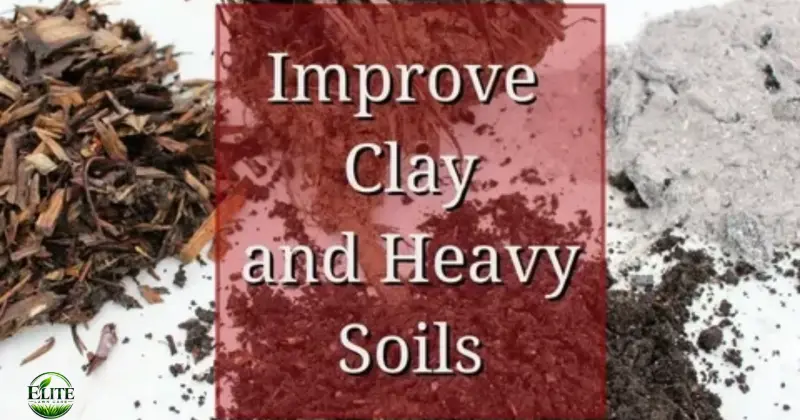
Organic matter is the most important soil amendment, according to Washington State University Extension. The VCE Gardener Handbook recommends a quarter-inch layer of compost as top-dressing once or twice a year on heavily compacted lawns.
Use cured compost only. NC State Extension warns that fresh compost can kill grass and tie up nitrogen in the soil.
NC State Extension advises mixing 1 to 2 cubic yards of compost per 1,000 square feet into the top 6 to 8 inches of heavy clay when you build a new lawn. That rate applies to new lawns only, not to a lawn that is already growing.
LSU AgCenter notes that the benefit of organic matter fades in a year or less. Repeat the top-dressing each year.
Compost and aeration prepare the soil, and seed fills the thin areas.
Step 4: Overseed Thin Areas
VCE advises fertilizing and seeding right after aeration, because the holes help seed contact the soil. VCE recommends a starter fertilizer with an N-P-K ratio of 1:2:1 or 1:2:2 for new seedings, based on the soil test.
Overseeding dates for fescue are in our guide to when to overseed a fescue lawn in Roanoke.
Daily habits also affect compaction.
Step 5: Mowing, Watering and Traffic
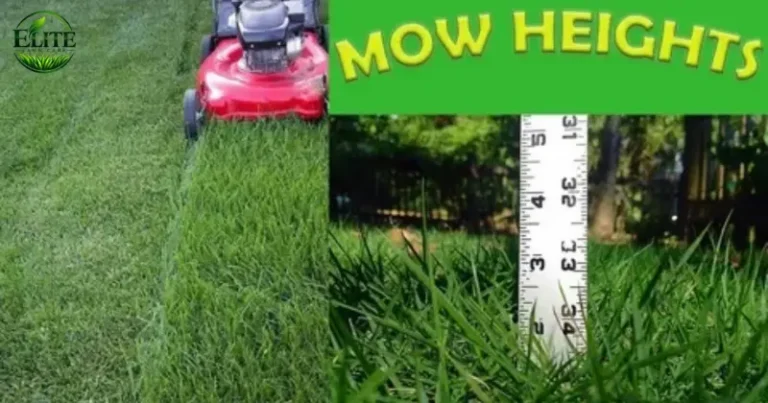
Mow tall fescue at 3 to 4 inches, as VCE recommends. A taller lawn has deeper roots and more shade over the soil. Our guide to how high to mow tall fescue explains the one-third rule.
Avoid mowing and heavy foot traffic on saturated soil. This point follows from VCE’s advice to work on moist but not wet soil and is not a direct VCE statement. Foot traffic, equipment and construction compact clay soil.
Some common fixes do not work, and a few do harm.
What Does Not Work on Clay Soil
The sources in this section come from extension programs in other states.
- Sand. LSU AgCenter states that sand must make up at least 50% of the soil to change clay substantially, which means working a layer as deep as the top 6 inches of the soil. K-State Extension warns that adding sand to clay can be very detrimental, and Washington State University Extension states that clay problems can grow worse when sand is added in the wrong proportions.
- A layer of sand on top of clay. The North Carolina Department of Agriculture and Consumer Services states that this has no effect on how clay drains.
- Gypsum. K-State Extension states that gypsum does not loosen heavy clay or relieve compaction. It improves structure only in clay with high sodium, which is not the case for most clay soils. Washington State University Extension gives the same finding.
- Spike aeration. VCE and NC State Extension both state that it is less effective and can add to compaction.
- Fresh compost. It can kill grass and tie up nitrogen.
The results of the working methods build up over several seasons.
How Long It Takes and How Often to Repeat
No published figure gives a time to fix clay soil, and results depend on the yard. The steps build on each other. Compost needs repeating every year, because organic matter breaks down. VCE recommends aeration for heavily used turf and for compacted soil, and an annual fall pass is a reasonable schedule for clay. Retest the soil every three to four years.
Some problems come from drainage and not from the soil.
When Drainage Is the Problem
Water that stands on the lawn for days after rain points to a grading or drainage problem. Aeration and compost cannot fix a low spot or runoff from a downspout. Grading and drains are site work, and a professional assessment can separate them from a soil issue.
Many homeowners compare doing the work themselves with hiring it out.
DIY or Professional Aeration and Overseeding
Roanoke-area price pages list core aeration at about $75 to $150. Angi lists a day of aeration machine rental at $80 to $120. Our lawn care cost guide lists the sources.
Homeowners who prefer professional equipment can use a core aeration and overseeding service in Roanoke. Elite Lawn Care serves Roanoke, Salem, Vinton, Cave Spring, Hollins and Bonsack. For a free lawn assessment, call or text +1 (804) 485-4915.
Clay soil care fits into the wider fall plan.
Related Lawn Topics
- Best grass seed for Roanoke lawns: choosing the right variety.
- Fall lawn care checklist for Roanoke homeowners: the seasonal sequence.
- Why grass turns brown in Roanoke: diagnosing damage.
Frequently Asked Questions
How do I improve a lawn on clay soil?
Test the soil, core aerate once a year in fall, top-dress with cured compost and overseed thin areas. VCE recommends core aeration for compacted turf and a quarter-inch compost layer once or twice a year on heavily compacted lawns.
Should I add sand to clay soil?
Usually not. Extension programs in other states state that sand can make clay worse unless it makes up at least half of the soil, which is rarely practical for a lawn.
Does gypsum break up clay soil?
Not for most clay. K-State Extension states that gypsum does not loosen heavy clay or relieve compaction, and it helps only clay with high sodium.
How often should I aerate a clay lawn?
NC State Extension advises frequent aeration for clay. For fescue, an annual pass in fall is a reasonable schedule, with extra attention to high-traffic areas.
When is the best time to improve clay soil in Roanoke?
Fall. VCE lists late August through mid-September for aerating tall fescue, and its calendar lists September through November as the preferred period for cultivation.
Is spike aeration good for clay?
No. VCE states that spiking is less effective than core aeration and can add to compaction.
Can grass grow well on clay soil?
Yes. Virginia Tech lists tall fescue as adapted to a wide range of soils. Compaction and poor drainage can still restrict roots, so test the soil and aerate.
How much compost should I put on my lawn?
The VCE Gardener Handbook recommends a quarter-inch layer once or twice a year on heavily compacted lawns. Use cured compost, not fresh.