Best Grass Seed for Roanoke, VA Lawns
By Elite Lawn Care Team. Last updated: October 18, 2026. Recommendations cite Virginia Cooperative Extension (VCE) and Virginia Tech.
Grass seed for a Roanoke lawn is cool-season seed, most often a turf-type tall fescue (TTTF) blend. Virginia Tech notes that no single grass is the best choice for every Virginia lawn, because the state’s transition-zone climate brings hot, humid summers and cold, wet winters. The right seed depends on sunlight, shade, traffic and soil.
Quick answer: For most Roanoke lawns, the best grass seed is a certified turf-type tall fescue blend made from varieties on Virginia Tech’s current recommended list. Fine fescues suit heavy shade with light traffic. Plant in early fall, which is the preferred window for cool-season grass in Virginia.
This guide compares the cool-season options, explains how to read a seed label and the Virginia variety list, and covers seeding rate, soil preparation, timing and aftercare.
Tall fescue is the starting point, so the next section explains why it fits Roanoke.
Why Tall Fescue Fits Roanoke Lawns
Tall fescue is the most common lawn grass in Virginia by acreage, according to Virginia Tech. It is well adapted to the Valley and Ridge region, which includes Roanoke. Virginia Tech’s publication Selecting Turfgrass for Virginia lists these strengths for turf-type varieties:
- The deepest root system of the cool-season lawn grasses, which helps the plant use moisture deeper in the soil.
- Excellent drought avoidance.
- Rapid germination, in 4 to 7 days.
- Early spring greening.
- Moderate shade tolerance.
- Adaptation to a wide range of soils.
Cool-season grasses grow best in spring and fall, when daytime highs stay in the 60 to 75°F range. Tall fescue follows this pattern.
Virginia Tech also lists limits:
- Tall fescue is managed as a bunch-type grass with limited to no recuperative potential. Bare spots do not fill on their own, so thin lawns need overseeding.
- Brown patch (Rhizoctonia blight) is a long-time disease concern, and gray leaf spot is an emerging one. Our guide to why grass turns brown in Roanoke explains how to tell the causes apart.
- The mowing requirement is high during active growth.
Tall fescue is not the only cool-season option, so the next section compares the others.
Cool-Season Grasses Compared for Roanoke Lawns
Virginia Tech compares the cool-season grasses used in Virginia lawns in SPES-748. The table summarizes that comparison.
| Grass | Best for | Main limitation | Maintenance |
|---|---|---|---|
| Turf-type tall fescue | Sun to moderate shade, general use | Limited recovery from damage; brown patch is a long-time concern | Low to medium |
| Tall fescue and Kentucky bluegrass mix (95:5, 90:10 or 85:15) | Lawns that need some recovery ability | Bluegrass tends to dominate over time, especially at 85:15 | Medium |
| Kentucky bluegrass | Full sun, fast recovery through rhizomes | Poor shade tolerance; 10 to 14 days to germinate; thatch buildup | High |
| Perennial ryegrass | Fast germination, usually used in mixes | Poor drought, heat and cold tolerance | High |
| Fine fescues | Shade and low-input areas | Poor traffic tolerance; dislikes poorly drained soil | Low |
Warm-season grasses such as zoysiagrass and bermudagrass are different. Virginia Tech notes that they lose their green color for 4 to 5 months each winter. They are mostly established by sod, plugs or sprigs rather than seed. This guide covers seed-based, cool-season lawns.
The comparison shows that the best choice depends on the yard, which the next section addresses.
Which Grass Seed Fits Your Yard?
Virginia Tech advises homeowners to define sun exposure, traffic and expectations before choosing a grass.
| Yard condition | Seed option | Note |
|---|---|---|
| Full sun to moderate shade | Turf-type tall fescue blend | The standard choice for most Roanoke lawns |
| Heavy shade, light traffic | Fine fescues | Best shade tolerance of the cool-season grasses; they can be mixed with bluegrass and ryegrass for sun-and-shade lawns |
| Active use that needs recovery | Tall fescue and Kentucky bluegrass mix | Seed mixes come as 95:5, 90:10 and 85:15 by weight; a higher bluegrass share means more maintenance over time |
| Compacted or poorly drained soil | Fix the soil first | New seed alone does not solve restricted roots or standing water |
Pets and children add wear. Tall fescue tolerates traffic to a point, but it does not spread to repair damage. Plan to overseed worn areas.
After the grass type is chosen, the next decision is which varieties to buy.
How to Choose Seed: The Variety List and the Label
Virginia Tech and the University of Maryland publish Virginia Turfgrass Variety Recommendations every year. A work group builds the list from National Turfgrass Evaluation Program trials. Varieties are sorted into two categories: Recommended and Promising. Virginia Tech suggests blending several varieties from the recommended list for cool-season grasses. Check the current list before you buy, because varieties change from year to year.
The seed label shows what is in the bag.
- Purity and germination. Purity is the share of the bag that is the stated seed. Germination is the percentage expected to sprout.
- Test date. VCE advises a germination test date within the last 12 months.
- Weed seed content. Lower is better.
- Pure live seed (PLS). Multiply germination by purity. A label with 85% germination and 98% purity gives 83.3% PLS. Compare bags by PLS, not by weight.
- Certification and treatment. VCE recommends certified seed. It also recommends fungicide-treated seed for new seedings, because seedlings are vulnerable to damping-off.
Large retail stores may not stock varieties from the Virginia list. Farm cooperatives and turf suppliers more often do.
The right bag still has to be spread at the right rate.
How Much Grass Seed Do You Need?
VCE publications give different rates for different jobs.
| Situation | Rate per 1,000 sq ft | Source |
|---|---|---|
| Tall fescue blend (all fescue) | 4 to 6 lb | VCE Gardener Handbook |
| 90 to 95% fescue with 5 to 10% Kentucky bluegrass | 3 to 4 lb | VCE Gardener Handbook |
| Overseeding existing fescue turf | 4 lb | VCE Peninsula calendar |
| New lawn from bare soil | 6 to 8 lb | VCE maintenance calendar |
Follow the product label and adjust to how thin the lawn is. A thin lawn needs less seed than bare ground.
Seed only germinates when it touches soil, which makes preparation the next step.
Soil Testing and Preparation
VCE states that spreading seed over untreated turf usually accomplishes little. Prepare the lawn first.
- Test the soil. VCE recommends testing at least one month before renovation and every three to four years for home lawns. Use the Virginia Tech soil testing lab. The test sets lime and fertilizer needs.
- Loosen the surface. Core aeration reduces compaction. Vertical mowing (dethatching) cuts grooves that hold seed. VCE notes that drill seeding gives the best seed-to-soil contact.
- Check thatch. Thatch thicker than half an inch interferes with seed establishment. Tall fescue rarely builds thick thatch.
Homeowners who prefer not to rent equipment can use a core aeration and overseeding service in Roanoke.
With the soil ready, timing decides the result.
When to Plant Grass Seed in Roanoke
Early fall is the preferred time to seed tall fescue in the Roanoke area. VCE lists the last week of August to mid-September for lower-elevation Western Virginia, and good results may still be possible into mid-October. Above 1,200 feet, the window is mid-August to mid-September. Early spring is the second-best option.
The full dates, Roanoke frost data and what to do after the window closes are in our guide to when to overseed a fescue lawn in Roanoke, VA.
After planting, aftercare decides whether the seed establishes.
Aftercare for New Grass
- Water. Water lightly and often until the seed germinates and roots reach 2 to 4 inches. Keep the soil moist for about 30 days. Then water less often and more deeply.
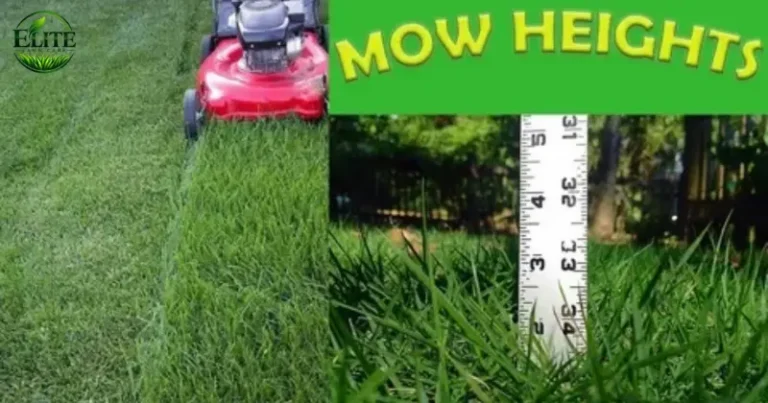
- Mow. Mow when the new grass reaches 4 inches and cut it to 3 inches. Never remove more than one-third of the blade. Use a sharp blade so seedlings are not pulled out.
- Fertilize. VCE recommends a starter fertilizer with an N-P-K ratio of 1:2:1 or 1:2:2, based on the soil test.
- Control weeds with care. Crabgrass and annual bluegrass preventers block seed germination. Apply broadleaf herbicides only after the new grass has been mowed two to three times, and follow the label.
Lawn care in the same season includes more than seeding.
Related Lawn Topics
- Fall lawn care checklist for Roanoke homeowners: the full seasonal sequence.
- Lawn fertilization and weed control in Roanoke: fall nitrogen timing for cool-season lawns.
- Yard cleanup and leaf removal in Roanoke: keeping leaves off new seedlings.
Frequently Asked Questions about best grass seed in Roanoke, VA
More lawn care answers: see our FAQ page.
Get Help Choosing and Seeding
Elite Lawn Care serves Roanoke, Salem, Vinton, Cave Spring, Hollins and Bonsack. For a free lawn assessment, call or text +1 (804) 485-4915 or use the contact page.