Winter Weeds in Roanoke Lawns: How to Identify and Control Them
By Elite Lawn Care Team. Last updated: October 21, 2026. Weed timing cites Virginia Cooperative Extension (VCE) and Virginia Tech turf specialists. Some Virginia Tech tips come from the Hampton Roads research center in eastern Virginia, which is warmer than Roanoke, so dates here are given as temperature cues and not calendar dates.
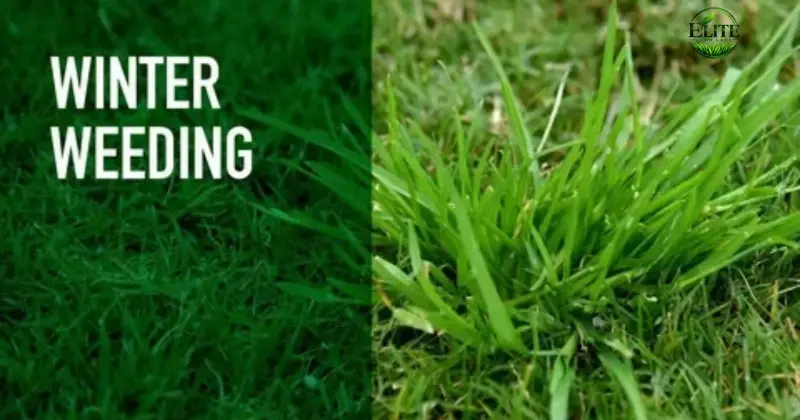
Winter weeds are winter annual weeds: plants that sprout in fall, stay small through winter, flower in spring and die in summer heat. The most common in Roanoke lawns are annual bluegrass, common chickweed and henbit. Timing decides control, because prevention works before the seeds sprout and treatment works best on small, actively growing weeds.
Quick answer: VCE says fall pre-emergent herbicides applied in August or September control annual bluegrass and winter annual weeds such as henbit and chickweed. By late October that window has closed. Weeds already growing are easiest to control while they are small, on a warm day above 50°F. Home lawns have few selective options for emerged annual bluegrass, and a dense lawn is the best long-term defense.
This guide shows how to identify the common winter weeds, why they appear and when each control method works. It also covers a seasonal calendar and common mistakes.
Identification comes first, because each weed responds differently.
What Winter Weeds Are
A winter annual completes its life in one cool season. Virginia Tech turf specialists note that when temperatures cool in September and rain arrives, winter annual weeds start to emerge. The plants stay small through winter and flower in spring, which is why they seem to appear overnight in March and April.
The weeds below are the ones to look for in Roanoke.
Common Winter Weeds in Roanoke Lawns
| Weed | Type | How to identify it | Note |
| Annual bluegrass | Grass | Light green clumps with whitish seedheads in spring | The main weed in fall-seeded cool-season lawns, according to VCE |
| Common chickweed | Broadleaf | Low, mat-forming plant with small white flowers that have split petals | Prefers cool, moist, thin turf |
| Henbit | Broadleaf | Square stems and reddish-purple tubular flowers | A member of the mint family |
| Purple deadnettle | Broadleaf | Looks similar to henbit | VCE lists deadnettle among the winter annual broadleaf weeds |
| Hairy bittercress | Broadleaf | Rosette of leaves and slender seed pods that burst when touched | Spreads quickly in mild winters |
| Lawn burweed | Broadleaf | Low-growing winter annual | Virginia Tech notes that it has increased in Virginia |
The identification features come from a Virginia weed guide and not from VCE. Confirm an unfamiliar weed with your local Extension office before you treat it.
Knowing where they grow explains why some lawns get more of them.
Why Winter Weeds Appear
Winter annual seeds sit in the soil until cool temperatures and rain trigger germination in fall. Thin turf gives them room and light. Gaps from summer heat, disease, traffic or compacted soil are the usual starting points.
A dense lawn leaves fewer openings, which is why the best prevention starts with the grass itself. Prevention with herbicide depends on timing.
Preventing Winter Weeds: The August to September Window
VCE states that several pre-emergent herbicides applied in August or September, depending on location, control annual bluegrass and many other winter annual weeds, including henbit, chickweed and geranium. Pre-emergent herbicides work only before the weeds sprout. They do not control weeds that have already emerged.
Virginia Tech turf specialists name prodiamine, dithiopyr and pendimethalin as crabgrass preventer ingredients that can also stop annual bluegrass before it germinates, and that can control some winter broadleaf weeds such as chickweed and henbit.
A pre-emergent also blocks grass seed. Virginia Tech advises homeowners to decide what matters more in a given area: overseeding or stopping annual bluegrass. Our guide to when to overseed a fescue lawn in Roanoke gives the seeding dates.
Plan the next pre-emergent window for next August. Weeds that are already growing need a different approach.
Controlling Weeds That Are Already Growing
Broadleaf weeds. Virginia Tech turf specialists recommend a three-way or four-way product containing 2,4-D, dicamba, MCPP or triclopyr for emerged winter broadleaf weeds in tall fescue. They advise these conditions:
- Choose a warm, sunny day with air temperatures above 50°F and light wind.
- Treat chickweed, lawn burweed and henbit while they are small and actively growing.
- Remember that the herbicides are absorbed through both the leaves and the roots.
VCE’s maintenance calendar gives the same rule: post-emergent herbicides work when the weeds are actively growing.
Annual bluegrass. Virginia Tech states that control of emerged annual bluegrass is very difficult for homeowners with cool-season lawns. One option is to live with it, because it dies in hot, dry weather.
New seedings. VCE states that no selective chemical is available soon after seeding to control emerged annual bluegrass. Virginia Tech lists mesotrione and quinclorac as the two herbicides that can be applied at seeding or to young stands of cool-season turf. Other products are for established turf that has been mowed two or three times.
Follow the product label for every herbicide. A fertilization and weed control service in Roanoke can handle the application for homeowners who prefer professional help.
Chemicals treat the symptom, and the lawn itself prevents the cause.
A Dense Lawn Is the Best Defense
Virginia Tech reports a study in which annual bluegrass decreased as the overseeding rate increased, because the new grass competed with the weed. Three habits keep tall fescue dense:
- Overseed thin areas in fall. The window is the last week of August to mid-September at lower elevations.
- Fertilize in September, October and November. VCE lists these as the main fertilizing months for tall fescue.
- Mow at 3 to 4 inches. Our guide to how high to mow tall fescue explains why taller grass leaves less room for weeds.
A calendar ties the tasks together.
Winter Weed Calendar for Roanoke
| Period | Task | Basis |
| August to September | Pre-emergent window for annual bluegrass and winter annuals | VCE |
| Late September to November | Scout the lawn and treat small broadleaf weeds on warm days above 50°F | Virginia Tech |
| Warm spells in winter | Treat actively growing broadleaf weeds only when air temperatures are above 50°F | Virginia Tech, VCE calendar |
| Spring | Broadleaf weeds flower and annual bluegrass shows white seedheads | Virginia Tech |
| Summer | Annual bluegrass dies in hot, dry weather | Virginia Tech |
The Virginia Tech tips cited here come from eastern Virginia. Roanoke is cooler, so use temperature cues and confirm local timing.
A few repeated errors cost most of the results.
Common Winter Weed Control Mistakes
- Spraying in cold weather. Weeds that are not actively growing do not absorb the herbicide.
- Waiting until the weeds are large. Small weeds respond better.
- Using a pre-emergent where you plan to seed. It stops grass seed too.
- Treating new seedlings with the wrong product. Virginia Tech limits seeding-stage options to two herbicides.
- Skipping identification. Annual bluegrass and broadleaf weeds need different treatments.
- Ignoring the thin spots. Weeds return to the same gaps each year.
Some lawns need more than a homeowner can do alone.
When to Hire a Professional
Professional help makes sense for large infestations, new seedings and weeds you cannot identify. In Virginia, a business that applies herbicides for hire needs a VDACS pesticide business license and a certified commercial applicator. Our guide to how to choose a lawn care company in Roanoke lists the questions to ask.
Elite Lawn Care serves Roanoke, Salem, Vinton, Cave Spring, Hollins and Bonsack. For a free lawn assessment, call or text +1 (804) 485-4915.
Weed control is one part of a fall lawn plan.
Related Lawn Topics
- Fall lawn care checklist for Roanoke homeowners: the full seasonal sequence.
- When to fertilize a lawn in Roanoke: the fall nitrogen schedule.
Frequently Asked Questions
What are winter weeds?
Winter weeds are winter annuals that sprout in fall, stay small through winter, flower in spring and die in summer heat. Annual bluegrass, chickweed and henbit are common examples.
What is the difference between henbit and chickweed?
Henbit has square stems and reddish-purple tubular flowers. Common chickweed forms a low mat and has small white flowers with split petals.
When should I apply pre-emergent for winter weeds in Roanoke?
VCE lists August and September, depending on location. That window has closed by late October, so plan for next August.
Can I still treat winter weeds now?
Yes, for broadleaf weeds. Treat them while they are small and actively growing, on a warm day above 50°F, and follow the label.
How do I get rid of annual bluegrass?
Virginia Tech states that control of emerged annual bluegrass is very difficult for homeowners with cool-season lawns. Prevent it with an August or September pre-emergent, or live with it, because it dies in hot, dry weather.
Why do winter weeds appear in my lawn?
Cool temperatures and rain trigger the seeds to sprout in fall. Thin spots from summer stress or compaction give them room.
Do winter weeds die on their own?
Winter annuals die in summer heat after they set seed. Seeds remain in the soil, so the weeds return the next fall.
Can I use weed killer on a newly seeded lawn?
Only limited products. Virginia Tech lists mesotrione and quinclorac as the two herbicides that can be applied at seeding or to young cool-season turf, and says other products need established turf that has been mowed two or three times.