Growing Grass in Shade Under Roanoke’s Trees
By Elite Lawn Care Team. Last updated: October 21, 2026. Guidance cites Virginia Cooperative Extension (VCE) and Virginia Tech. Sunlight, pruning and leaf guidance also cites Clemson and University of Tennessee Extension, which write for nearby states, so some figures there are for South Carolina or Tennessee conditions.
Growing grass in shade means managing a lawn that gets limited direct sunlight, usually because of trees. Grass uses sunlight to make the energy it needs to grow. Extension programs agree that grass needs about 4 hours of direct sunlight a day, and Roanoke yards with mature trees often sit near that limit.
Quick answer: Grass needs at least about 4 hours of direct sun per day. VCE says areas with less are often better suited to shade-tolerant ground covers or mulched beds. Fine fescues have the best shade tolerance of the cool-season grasses, and turf-type tall fescue tolerates moderate shade. In shade, mow at the upper end of 3 to 4 inches, use half to two-thirds of the nitrogen, water deeply and less often, and keep fallen leaves off the grass.
This guide shows how much sun grass needs, why shade is hard on lawns and which grass to choose. It also covers pruning, seeding time, mowing, fertilizer, water, leaves and the cases where mulch is the better answer.
Sunlight is the first thing to measure.
How Much Sun Does Grass Need?
Clemson Extension states that an area getting less than 4 hours of sunlight per day is too shady for grass to grow well. Less light reduces photosynthesis, so the plant tolerates heat, cold, disease, drought and wear less well.
| Direct sun per day | What to expect | Basis |
| Less than 4 hours | Grass struggles. VCE suggests shade-tolerant ground covers or mulched beds | VCE, Clemson |
| About 4 to 5 hours | Fine fescues are the most shade-tolerant choice | Virginia Tech, Clemson |
| 5 hours or more | Tall fescue can grow well. Clemson states it needs as little as 5 hours | Clemson |
| Full sun | Turf-type tall fescue is the standard choice | VCE |
Count the hours when the trees are in full leaf, and check at several times of day. This is a practical check and not an extension rule.
Light is only one of several problems under trees.
Why Shade Is Hard on a Lawn
Clemson Extension lists these causes of shade lawn decline:
- Less light. Photosynthesis falls, so the grass has less energy for roots and growth.
- Competition from trees and shrubs. Their roots share the same soil, so they take water and nutrients that the grass needs.
- Higher disease pressure. Shade brings higher humidity, reduced air circulation and long dew periods.
- Steady thinning. Shaded turf often loses density over a period of years.
Virginia Tech also advises homeowners to consider how the growth of trees will change the light and water available to the lawn in the coming years. University of Tennessee Extension notes that fescues compete with tree roots for water.
The first decision is which grass to plant.
Choose the Right Grass for Shade
Virginia Tech states that fine fescues have the best shade tolerance of the cool-season turfgrasses and are well suited to low-input settings with limited traffic. Turf-type tall fescue has moderate shade tolerance, and Kentucky bluegrass has poor shade tolerance.
VCE advises turf-type tall fescue for sunny areas and fine fescues such as creeping red, chewings or sheep fescue for shady areas. A sun-and-shade seed mixture, with bluegrass for the sun and fine fescue for the shade, is also sold. Virginia Tech notes that the grasses tend to separate over time, and that fine fescue has the best chance of persisting in moderate shade.
The seed label, variety list and seeding rates are in our guide to the best grass seed for Roanoke lawns.
The grass is only part of the answer, because the trees can change too.
Let More Light Reach the Grass
Clemson Extension recommends selective pruning of branches, especially low ones, to improve air movement and light penetration. Its guideline is to keep the lowest branches of trees more than 6 feet above the ground, and to remove unnecessary trees and shrubs.
Clemson also states that trees with dense canopies and shallow roots usually defeat a turf stand, even with proper management. It lists sycamores, many oaks and most elms as causing fewer problems, and ash, willow, poplar and some maples as undesirable. That list is for South Carolina, so confirm local tree behavior with an arborist or your Extension office.
Large-tree pruning is arborist work. Seed timing comes next.
Seed Early Enough to Beat the Leaves
Clemson advises establishing cool-season grass early enough in fall for the turf to mature before leaves cover the ground. In Roanoke, VCE lists the last week of August to mid-September for lower-elevation Western Virginia, and mid-August to mid-September above 1,200 feet. Our guide to when to overseed a fescue lawn in Roanoke gives the full dates.
New seedlings under trees have little time to mature before leaves fall, so early fall seeding matters more in shade.
Once the grass is growing, its care changes.
Mowing, Fertilizing and Watering in Shade
| Practice | Shade adjustment | Basis |
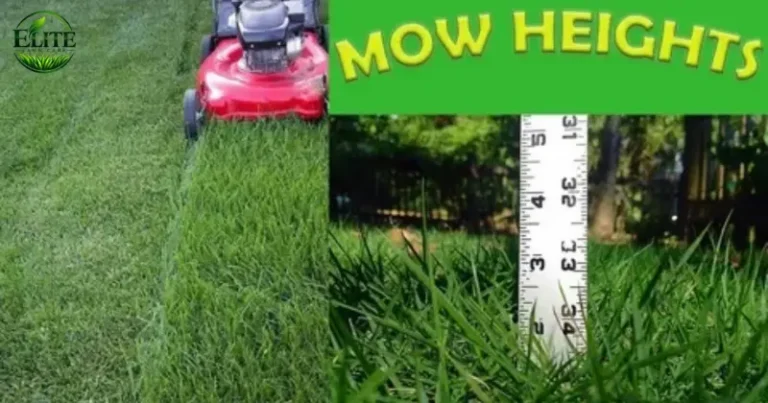
| Mowing | Mow at the upper end of the 3 to 4 inch range. Clemson advises one-half to 1 inch higher than normal, because shaded turf needs more leaf surface to catch the light | VCE, Clemson |
| Nitrogen | Use one-half to two-thirds as much as in full sun. Apply after most leaves have fallen, because October and November applications are generally most effective in shade | Clemson, VCE Publication 430-011 |
| Watering | Water less often than sunny areas, deeply and only when needed. Light, frequent watering encourages shallow roots and disease | Clemson |
| Fine fescue lawns | Avoid heavy nitrogen. University of Tennessee Extension notes that a red fescue lawn declines rapidly with an excessive rate | University of Tennessee |
VCE publications give a 3 to 4 inch range for tall fescue and no separate shade height, so the upper end of that range is the closest match to Clemson’s advice. Our guide to how high to mow tall fescue explains the one-third rule. The nitrogen schedule is in our guide to when to fertilize a lawn in Roanoke.
Shade lawns also face fall leaf cover.
Keep Leaves Off Shaded Grass
Clemson states that grass keeps growing long after deciduous trees drop their leaves, so fall leaves should be raked, blown or bagged before they smother it. The University of Minnesota Extension recommends mulching leaves with a mower while you can still see about half of the lawn surface, and bagging them when less than half is visible.
Under mature trees the leaf load is heavy. Our guide to fall leaf removal in Roanoke explains when to mulch and when to bag.
Even with good care, shade lawns develop their own problems.
Shade Lawn Problems: Disease and Thinning
Clemson states that diseases tied to high moisture or high humidity can be more serious in shade, because air moves less and surface moisture lasts longer. Good variety selection and management reduce the severity. Three habits help:
- Water early in the morning so the grass dries. VCE advises avoiding night watering.
- Avoid excess nitrogen, which Clemson links to more disease in shade.
- Prune low branches to improve air movement.
Brown patches under trees can have several causes. Our guide to why grass turns brown in Roanoke shows how to tell them apart.
Some spots will not grow grass at any level of care.
When Grass Will Not Grow: Mulch and Groundcovers
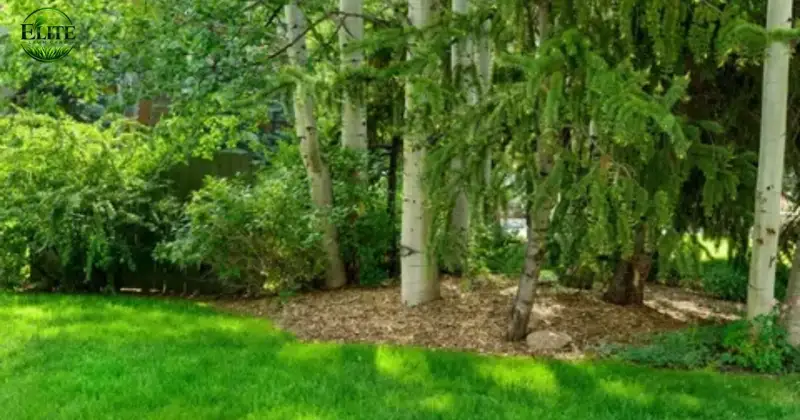
VCE states that areas with less than 4 hours of sun are often better suited to shade-tolerant ground covers or mulched beds. Clemson offers two options when quality turf cannot be kept: remove the ornamentals that cause the shade, or plant a suitable groundcover.
A mulched bed under a mature tree also avoids repeated reseeding of bare ground. Homeowners who want help with planted areas can use a mulching and shrub care service in Roanoke.
A site assessment can settle the question.
DIY or Professional Help
A homeowner can measure sun hours, prune low branches within reach and follow the adjustments above. A professional assessment helps when the lawn thins every year, when tree roots dominate the soil or when you cannot tell whether light, water or disease is the cause.
Elite Lawn Care serves Roanoke, Salem, Vinton, Cave Spring, Hollins and Bonsack. For a free lawn assessment, call or text +1 (804) 485-4915 or use the contact page.
Shade care fits into the wider seasonal plan.
Related Lawn Topics
- Best grass seed for Roanoke lawns: choosing the right variety.
- Fall leaf removal in Roanoke: mulch or bag.
- How high to mow tall fescue: the 3 to 4 inch range.
Frequently Asked Questions
How much sun does grass need?
About 4 hours of direct sun per day. Clemson Extension states that less is too shady for grass to grow well, and VCE suggests ground covers or mulched beds below that level.
What is the best grass for shade in Roanoke?
Fine fescues. Virginia Tech states that they have the best shade tolerance of the cool-season grasses. Turf-type tall fescue tolerates moderate shade.
Can tall fescue grow in shade?
Yes, in moderate shade. Virginia Tech lists moderate shade tolerance, and Clemson states that tall fescue can grow well with as little as 5 hours of sun.
How high should I mow grass in shade?
At the upper end of the 3 to 4 inch range for tall fescue. Clemson advises one-half to 1 inch higher than normal.
How much fertilizer does shaded grass need?
One-half to two-thirds as much nitrogen as grass in full sun, according to Clemson Extension and VCE. Apply after most leaves have fallen.
Should I water grass under trees?
Water deeply and only when needed. Clemson states that shaded areas need less water than sunny areas and that light, frequent watering promotes shallow roots and disease.
When should I seed grass under trees?
In early fall, before leaves fall. VCE lists the last week of August to mid-September for lower-elevation Western Virginia.
What can I do if grass will not grow under my trees?
Use a shade-tolerant groundcover or a mulched bed, as VCE suggests, or remove the shrubs or trees that cause the shade.