
How to Prepare Your Lawn for Winter
Preparing your lawn for winter involves removing excessive leaves, mowing at the appropriate height, checking soil conditions, and adjusting watering and fertilization to your grass type. For homeowners in Roanoke, Virginia, these steps help protect existing turf and prepare the lawn for healthier growth when spring arrives.
Virginia’s changing seasons create different challenges for cool-season and warm-season grasses. Knowing which grass grows in your yard, understanding local weather conditions, and completing essential maintenance at the right time can make winter lawn care more effective.
For a complete seasonal maintenance plan, follow our fall lawn care checklist for Roanoke homeownersx
This guide explains how to prepare your lawn for winter in Roanoke, VA, and what to avoid before temperatures drop.
1. Identify Your Grass Type Before Winter
The first step in winter lawn preparation is understanding which grass grows on your property. Different grass types respond differently to colder temperatures and require different seasonal maintenance.
According to Virginia Tech’s turfgrass selection guidance, turf-type tall fescue is one of the best-adapted lawn grasses across Virginia.
If you are choosing grass for your property, read our guide to the best grass seed for Roanoke, VA lawns.
Cool-Season Grasses
Tall fescue and Kentucky bluegrass are cool-season grasses that grow actively during cooler weather. Fall is an important period for root development, lawn recovery, and establishing new grass.
Tall fescue is particularly common in Virginia residential lawns because it has a deep root system and good drought avoidance characteristics. However, it still benefits from appropriate mowing, soil management, and seasonal care.
Warm-Season Grasses
Bermudagrass and zoysiagrass are warm-season grasses. Their growth slows as temperatures fall, and they typically enter dormancy during winter.
Do not automatically apply the same fall fertilization or overseeding recommendations used for tall fescue to a warm-season lawn. Choose maintenance practices according to your grass type and local growing conditions.
2. Remove Excessive Leaves and Lawn Debris
Fallen leaves are one of the most common problems homeowners face during autumn. Although leaves can provide organic material as they break down, a thick layer left on the lawn can block sunlight and restrict airflow around the grass.
When Should You Mulch Leaves?
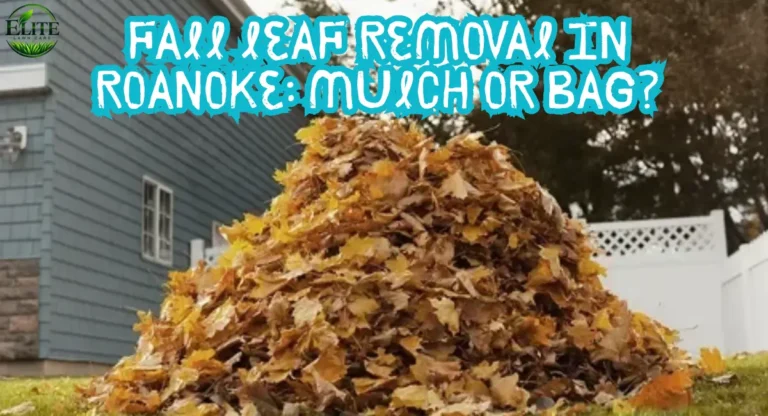
If leaves are relatively light and scattered, mowing over them with a mulching mower can break them into smaller pieces. These small pieces can decompose and return organic material to the soil without creating a thick covering.
Check the lawn after mowing. If large leaf pieces remain visible or form a mat, collect the excess rather than leaving it on the grass.
When Should You Remove Leaves?
Remove heavy leaf accumulations, fallen branches, and other debris that cover the turf. Pay particular attention to areas beneath mature trees, along fences, and around garden beds where leaves tend to collect.
If your property has extensive leaf buildup, professional yard cleanup and leaf removal services in Roanoke can help clear the lawn before winter.
3. Adjust Your Mowing Routine Before Winter
Mowing remains important during fall, but your schedule should follow grass growth rather than a fixed calendar date.
Maintain the Appropriate Grass Height
Avoid cutting your lawn too short simply because winter is approaching. Scalping removes too much leaf tissue and can weaken the grass.
Instead, follow the recommended mowing height for your grass species. Keep mower blades sharp and avoid mowing when the ground is frozen or excessively wet.
Follow the One-Third Mowing Rule
Virginia Tech recommends following the one-third mowing rule: never remove more than one-third of the grass blade in a single mowing session.
For example, if your lawn needs to be maintained at a particular height, adjust the mower gradually rather than cutting long grass down dramatically in one visit.
Continue mowing while the lawn is actively growing. As temperatures decline and growth slows, mowing frequency will usually decrease naturally.
There is no universal date for the final mow. Grass type, local temperatures, rainfall, and the condition of your lawn determine when mowing is no longer necessary.
4. Test Your Soil Before Applying Fertilizer
Soil conditions influence how effectively grass roots absorb nutrients and water. Applying fertilizer without understanding your soil can waste money and may contribute to nutrient runoff.
Virginia Cooperative Extension recommends soil testing to evaluate fertility and pH, with testing at least once every three years as a useful guideline. Fall is a practical time to identify soil problems and plan appropriate amendments.
Check Soil pH and Nutrient Levels
A soil test can help determine whether your lawn needs lime or particular nutrients. Do not assume every Roanoke lawn has the same pH, even when neighboring properties appear similar.
You can find sampling instructions and testing information through Virginia Cooperative Extension.
Fertilize According to Grass Type
Cool-season lawns such as tall fescue often benefit from properly timed fall fertilization. The appropriate application depends on grass condition, soil-test results, previous fertilizer applications, and the product being used.
Warm-season grasses have different seasonal nutrient requirements. They should not automatically receive the same fall treatment as cool-season turf.
Avoid fertilizing frozen ground or applying products immediately before heavy rainfall. Always follow the product label and relevant Virginia recommendations.
For help with nutrient deficiencies and seasonal treatment, explore Elite Lawn Care’s fertilization and weed control services.
5. Manage Water Before Freezing Weather Arrives
As temperatures fall and grass growth slows, watering requirements usually change. Continuing a summer irrigation schedule without considering rainfall and soil moisture can leave the lawn unnecessarily wet.
Water According to Weather Conditions
Check soil moisture and recent rainfall before watering. If the soil is already moist, additional irrigation may not be necessary.
During dry periods, watering may still be appropriate when temperatures and soil conditions allow. Avoid creating waterlogged areas, especially where drainage is already poor.
Newly seeded lawns may require more careful moisture management than established turf. Follow the instructions for the seed or lawn treatment being used.
Prepare Irrigation Equipment for Winter
If your property has an irrigation system, follow the manufacturer’s winterization instructions. Depending on the system, this may involve draining exposed components or arranging professional winterization to reduce freeze damage.
Do not assume that every system can be winterized in the same way.
6. Decide Whether Aeration or Overseeding Is Necessary
Winter preparation is also an opportunity to assess areas where the lawn struggled during the growing season.
Thin grass, bare patches, and compacted soil may indicate that the property needs more than routine mowing. However, the correct solution depends on the underlying problem.
When Does Aeration Help?
Core aeration removes small plugs of soil, creating openings that improve the movement of air, water, and nutrients through compacted ground.
This can be useful for lawns affected by heavy foot traffic or compacted soil. Aeration is not necessary for every lawn every year; the decision should reflect soil conditions and turf health.
When Should You Overseed?
For cool-season grasses in Virginia, late summer to mid-fall is generally the preferred establishment period. Successful overseeding depends on appropriate temperatures, seed-to-soil contact, moisture, and enough time for new grass to establish.
If the preferred fall window has passed, do not assume that late-season seeding will produce the same results. Assess the lawn and plan the next suitable establishment period according to local conditions.
For local planting dates and seasonal recommendations, read our guide on when to overseed a fescue lawn in Roanoke, VA.
Learn more about lawn aeration and overseeding in Roanoke, VA.
7. Protect Your Lawn From Common Winter Damage
Once major maintenance is complete, a few simple precautions can help prevent avoidable damage.
- Limit traffic on frozen grass: Repeated walking or equipment use on frost-covered turf can damage grass blades.
- Keep the lawn clear: Remove heavy leaf piles and debris that cover the grass.
- Watch drainage: Standing water and persistently saturated soil may indicate a drainage problem that needs attention.
- Avoid unnecessary treatments: Do not apply fertilizer, lime, or other lawn products without considering their purpose, timing, and label directions.
- Understand winter dormancy: Brown or straw-colored grass does not necessarily mean the lawn is dead. Warm-season grasses normally lose their green color during dormancy, while cool-season grasses may also show winter stress.
If your lawn stays brown or develops persistent patches, learn about the reasons grass turns brown in Roanoke, VA and how to identify possible causes.
If your lawn develops persistent bare patches or unusual discoloration, assess the underlying cause before choosing a treatment.
8. Winter Lawn Preparation Checklist for Roanoke Homeowners
Before winter settles in, review these essential tasks:
- Identify whether your lawn contains cool-season or warm-season grass.
- Mulch manageable leaves and remove excessive leaf buildup.
- Continue mowing as needed without cutting too much grass at once.
- Test your soil before applying lime or fertilizer.
- Adjust watering to rainfall, soil moisture, and temperatures.
- Prepare irrigation equipment for freezing weather.
- Assess compacted areas, thin turf, and bare patches.
- Plan any remaining aeration or overseeding for an appropriate growing period.
Roanoke properties can have different sunlight, soil, drainage, and exposure conditions. A maintenance plan that works in one yard may not be suitable for another.
Frequently Asked Questions about how to prepare lawn and yard in Roanoke, VA
More lawn care answers: see our FAQ page.
Get Your Lawn Ready for Winter With Elite Lawn Care
Preparing your lawn for winter starts with the right maintenance at the right time. Managing fallen leaves, mowing appropriately, testing your soil, and addressing compaction can help you make informed decisions about your property’s needs.
Elite Lawn Care provides lawn care services for homeowners in Roanoke, Salem, Vinton, Cave Spring, Hollins, Bonsack, and surrounding communities.
If your lawn has excessive leaf buildup, thin grass, or compacted soil, our team can help you assess the situation and explore suitable seasonal services.
Call or text Elite Lawn Care at (804) 485-4915 to request your free lawn assessment.
You can also explore our lawn care services in Roanoke, VA to find the right next step for your property.