

Fall Lawn Care Checklist for Roanoke, VA Homeowners: Prepare Your Lawn for Winter
After a long summer, many Roanoke lawns show heat stress, thinning grass, weed growth, and compacted soil. Most homeowners focus on keeping grass green in summer, but fall is actually the most important season for repairing damage and preparing grass for a healthier spring.
A proper fall lawn care routine is not just raking leaves and mowing one last time. It means improving soil, strengthening roots, restoring thin areas, and protecting the lawn before winter. For the cool-season lawns common in Southwest Virginia, especially tall fescue, fall offers ideal growing conditions. According to Virginia Cooperative Extension, fall is one of the best times to establish and improve cool-season turfgrass because soil temperatures stay favorable for root development while cooler weather reduces stress on new growth.
At Elite Lawn Care, we help Roanoke homeowners maintain healthier lawns through seasonal services built around Virginia’s climate and soil. This fall lawn care checklist covers the essential steps, a fall lawn maintenance schedule, and the mistakes to avoid.
Why Fall Lawn Care Is Important for Roanoke, VA Lawns

After months of heat, humidity, drought, and foot traffic, many lawns enter fall weaker than they were in spring. Thin grass, bare patches, compacted soil, and heavier weed pressure are common signs your lawn needs attention.
The good news is that fall is the best chance to correct these problems. In summer, grass mainly tries to survive the heat. In fall, cooler air, warm soil, and better moisture let it put energy into root growth, recovery, and turf density. These conditions make fall the right time for aeration, overseeding, fertilization, weed control, and seasonal maintenance.
Strong roots matter more than color. Many homeowners judge lawn health only by how green the grass looks, but a healthy lawn starts below the surface. Healthy soil supports stronger roots, stronger roots let grass absorb water and nutrients more efficiently, and thicker grass survives winter better and returns healthier in spring. That is why a proper fall lawn maintenance schedule works on the whole system, not just mowing and leaf cleanup.
Soil is a big part of this in our area. Many Roanoke properties deal with compacted soil, which limits the oxygen, water, and nutrients reaching grass roots. Signs include water sitting on the lawn after rain, thin grass despite regular maintenance, a hard soil surface, and bare patches. In these cases, lawn aeration in Roanoke VA creates pathways for air, water, and nutrients to reach the root zone.
Fall work also pays off in spring. A lawn that develops roots, establishes new grass, and stores nutrients in fall enters winter stronger and usually needs less repair when growth restarts.
Fall Lawn Maintenance Checklist: Tasks Every Roanoke Homeowner Should Complete
Order matters, because each step prepares the lawn for the next. Your goals are to repair summer damage, improve soil and grass health, and prepare the lawn to survive winter and recover faster in spring. A fall lawn care schedule usually starts in late summer or early fall and runs until the first major frost.
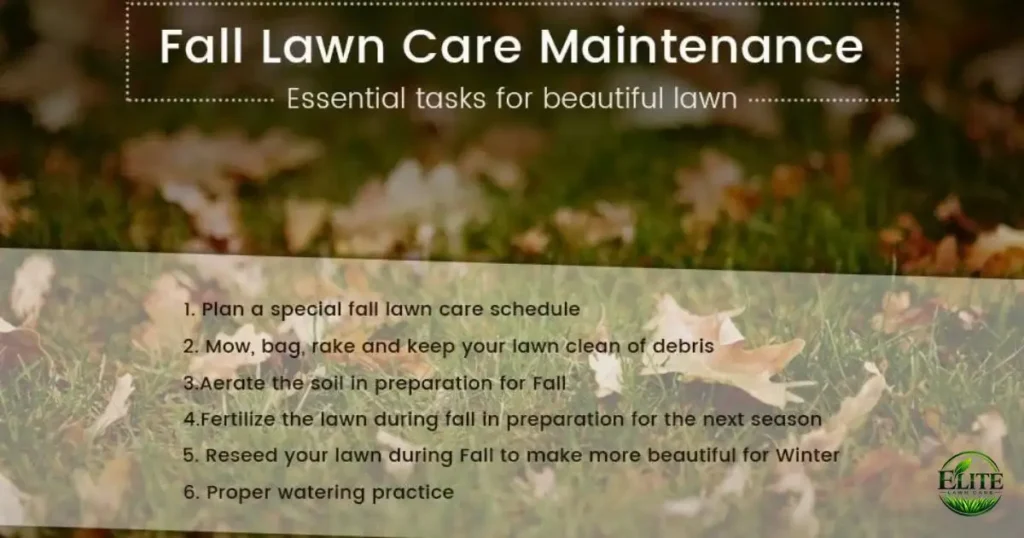
1. Inspect Your Lawn After Summer Stress
Start with a full inspection. Look for thin areas, bare spots, brown patches, weeds, compacted soil, and poor drainage. Then match the problem to the fix: thin grass may need overseeding, compaction needs aeration, poor color may point to nutrient issues, and weeds often signal weak turf density. Understanding the cause keeps you from applying treatments your lawn doesn’t need. A simple test: push a screwdriver or soil probe into the ground. If it’s hard to penetrate, compaction is likely limiting root growth.
2. Test Your Soil Before Fall Fertilization
Many homeowners fertilize without knowing what their lawn needs. A soil test shows pH and nutrient levels, including nitrogen, phosphorus, and potassium. According to Virginia Cooperative Extension, soil testing helps determine nutrient needs and prevents unnecessary fertilizer applications. Properties in the Roanoke area can differ in soil, drainage, and use, so testing is especially useful here.
3. Aerate Your Lawn to Reduce Soil Compaction
Core aeration is one of the most valuable fall steps. Foot traffic, pets, equipment, and natural settling compact soil over time. Core aeration pulls small plugs of soil from the lawn, opening channels that improve water movement, oxygen flow, nutrient absorption, root growth, and seed-to-soil contact. It also helps break up excess thatch, the layer of dead grass and roots that can block water from reaching the soil. For homeowners searching for lawn aeration Roanoke VA, fall is usually ideal because grass is actively recovering and responds quickly to better soil conditions.
4. Overseed Thin or Damaged Lawn Areas
After aeration comes overseeding, which adds new grass seed to fill thin areas, repair summer damage, thicken turf, and leave less room for weeds. For many Roanoke lawns, tall fescue is a popular choice because it performs well in Virginia’s climate. Fall is the preferred season because soil stays warm enough for germination, cooler air reduces stress, rainfall often improves moisture, and new grass has time to root before summer. For lawn overseeding Roanoke VA, focus on timing, seed selection, soil preparation, and watering after application. Our aeration and overseeding service covers all of these steps.
Seed is usually applied after aeration or with slit seeding (also called slice seeding) equipment, which cuts shallow grooves for better soil contact, and a starter fertilizer can help new seedlings root. Aftercare matters just as much as the application. Keep the seedbed consistently moist while seed germinates, limit heavy foot traffic on new seedlings, and wait until the new grass is established before the first mowing. Results build gradually, and heavily damaged lawns may need more than one growing season to fully recover.
5. Apply Fall Fertilizer for Stronger Roots
Fall fertilizer is about strengthening grass before winter, not just making it greener. It supports root development, energy storage, and faster spring recovery, and a later-season feeding (often called a winterizer application) helps grass store nutrients while it is still taking them up. The right product depends on soil test results, grass type, lawn condition, and existing nutrient levels, because too much of the wrong nutrient can create problems. If your lawn needs seasonal feeding, professional lawn fertilization in Roanoke VA helps ensure the right product goes down at the right time and rate.
These first five steps build the foundation. Mowing, leaf management, weed control, and winter preparation finish the job.
6. Continue Proper Fall Mowing
Mowing still matters in fall. Tall fescue keeps growing as it prepares for cold weather, and correct mowing helps it produce energy and build roots. Cutting too short removes leaf surface, can expose the grass crown, increases winter stress, and slows spring recovery. For many tall fescue lawns in Virginia, a mowing height of around 2.5 to 3.5 inches protects the grass while supporting healthy growth. Keep mowing until growth naturally slows, and never remove more than one-third of the blade at once. See our lawn mowing service in Roanoke if you’d rather hand this off.
7. Manage Fallen Leaves Before They Damage Your Lawn
Thick leaf layers block sunlight and airflow and trap moisture, which can lead to yellowing, weak turf, and a higher risk of lawn disease. For leaf removal Roanoke VA, regular cleanup through fall protects the turf.
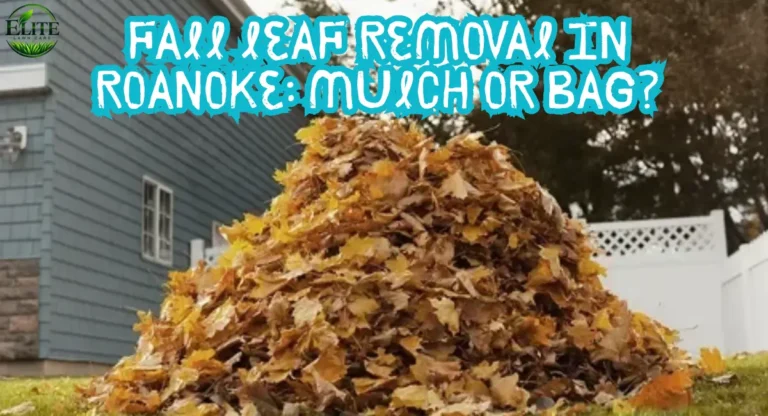
Should you remove leaves or mulch them? Light coverage can be mulched with a mower, returning organic matter to the soil. Remove leaves when grass is no longer visible, large piles form after storms, moisture stays trapped underneath, or the lawn gets little sunlight. Most Roanoke properties do best with a mix of both. If your yard has more leaves than you can handle, see our yard cleanup and leaf removal service.
8. Control Fall Weeds Before Winter

Many homeowners think only about spring weeds, but several cool-season weeds establish in fall, including chickweed, henbit, clover, and other broadleaf weeds. Summer crabgrass also dies off with the first frost, which often leaves bare patches that are ideal spots for fall overseeding. They compete with grass for nutrients, water, sunlight, and space, and a thin lawn gives them more room.
The best long-term weed control is a thicker lawn. Aeration improves soil, overseeding increases density, fertilization strengthens growth, and healthy grass leaves fewer openings. Targeted treatments for weed control in Roanoke VA can then handle existing problems.
9. Adjust Watering Before Winter
Fall lawns need less water than summer lawns, but stopping too early can limit root development before winter. Consistent moisture supports root growth, seed establishment, and recovery from summer stress, and it is especially important for newly overseeded areas during germination. Avoid overwatering, constantly wet soil, and watering during freezing conditions.
10. Prepare Your Lawn Before Winter in Roanoke, VA
The final stage shifts from improvement to protection.
- Final inspection: before the first major frost, check for thin sections, bare patches, leftover weeds, heavy leaf buildup, and poor drainage so you can plan spring work.
- Final mowing: leave the grass at a healthy height, remove leaves and debris, and avoid thick layers of clippings.
- Equipment: clean the mower deck, sharpen blades if needed, and store trimmers, spreaders, and tools dry.
- Winter protection: once temperatures drop, grass goes dormant and becomes fragile. Avoid parking on grass, heavy foot traffic on frozen turf, and heavy equipment on wet soil, since frozen blades break easily and leave damaged areas that need repair in spring.
Is It Too Late to Overseed in Roanoke in October?
Not necessarily, but the window is closing. Overseeding works best in late summer through early fall, when warm soil helps seed germinate and cooler air reduces stress on seedlings. By October, soil temperatures are dropping, and new grass has less time to establish roots before winter. The later you seed, the lower the success rate tends to be.
Overseeding in October may still work if:
- Seed can go down soon, rather than in November or later
- Soil is not yet cold or frozen
- The area has been aerated or the soil surface is loosened for seed-to-soil contact
- You can keep the seedbed consistently moist while seed germinates
It is probably too late, or the risk is high, if:
- Hard frosts are already regular
- Soil is cold and growth has slowed to a stop
- You cannot water consistently
- The area is shaded, wet, or heavily used
- Mild weather continues for several more weeks
What to do if you’ve missed the fall window
Don’t throw seed down in cold weather and hope. Instead:
- Wait for spring. Seeding in early spring is the next best option, but results are usually less reliable than fall because seedlings must handle summer heat soon after they sprout.
- Mind your weed control timing. Many spring pre-emergent products stop grass seed from germinating too. If you plan to overseed in spring, plan the weed-control product around it.
- Protect what you have. Keep mowing at a healthy height, remove leaves so thin areas get light, and avoid foot traffic on dormant turf.
- Ask before you seed. If you’re not sure whether your lawn is still a good candidate this year, we can look at your soil, shade, and drainage and tell you honestly whether to seed now or wait. Call or text +1 (804) 485-4915.
Weather varies year to year, so use this as a guide, not a deadline. Confirm timing against current Virginia Cooperative Extension turf recommendations for your area.
Roanoke, VA Fall Lawn Care Schedule
Weather varies each year, but this timeline works for many Roanoke-area lawns:
- Late August to September: lawn inspection, soil testing, aeration, and overseeding. This is the best window for new grass establishment.
- September to October: fall fertilization, weed control, and continued mowing, while the lawn builds roots and stores energy.
- October to November: leaf management, final mowing, equipment storage, and irrigation adjustments.
If you’re short on time, prioritize in this order: aeration and overseeding first, fertilization second, then leaf and weed management. These steps give the lawn the biggest boost before winter.
Common Fall Lawn Care Mistakes Roanoke Homeowners Should Avoid
A good plan can fall apart when tasks are done at the wrong time or in the wrong way. Avoid these mistakes:
- Starting too late. Cool-season grasses have a limited window to grow and recover. Plan early and begin improvement work in early fall.
- Fertilizing without knowing soil needs. More fertilizer is not better. Test the soil first to avoid nutrient imbalance, wasted product, and runoff.
- Skipping aeration. Overseeding or fertilizing compacted soil limits results, especially on lawns with heavy traffic, pets, clay-heavy soil, or poor drainage.
- Cutting grass too short before winter. Low mowing reduces energy production, exposes crowns, and slows spring recovery.
- Leaving thick leaf layers. They block sunlight, trap moisture, and encourage disease. Mulch light coverage and remove the rest.
- Overseeding without preparation. Seed needs direct soil contact. Skipping aeration, seed selection, and watering planning is why many DIY jobs fail.
- Treating symptoms instead of causes. Thin grass may come from compaction, shade, or low nutrients, and weeds often mean weak turf. Identify the cause before choosing a treatment.
- Assuming lawn care ends after cleanup. Good soil, strong roots, and proper winter protection continue the work into spring.
DIY Fall Lawn Care vs. Professional Lawn Care in Roanoke, VA

Many homeowners can handle mowing, light leaf cleanup, and watering themselves. DIY makes sense when your lawn is already healthy, you have the equipment, and it only needs basic seasonal care.
Technical steps like aeration, overseeding, fertilization, and weed control depend on timing, equipment, and soil knowledge. Professional help is a better choice for thin or damaged grass, soil compaction, recurring weeds, poor growth despite regular care, or large areas needing overseeding. A local company understands how Roanoke’s climate, soil, and cool-season grasses affect lawn health, and how conditions differ between a shaded yard near Mill Mountain and an open lot in Cave Spring, Vinton, or Salem. Our lawn maintenance programs combine these services into one seasonal plan.
Why Choose Elite Lawn Care for Fall Lawn Maintenance?
A healthy lawn takes more than occasional mowing. It takes an understanding of how local conditions, grass types, soil quality, and weather affect growth. Roanoke lawns face summer heat stress, compacted soil, weed pressure, and the needs of tall fescue, and our fall services are designed around those challenges: improving soil through aeration, repairing thin areas through overseeding, strengthening roots through proper fertilization, managing weeds early, and keeping the lawn clean through the season. Whether your lawn needs help recovering from summer stress, filling in thin areas, managing weeds, or preparing for winter, we build the plan around your property’s specific conditions instead of a one-size-fits-all package.
Frequently Asked Questions About Fall Lawn Care in Roanoke, VA
More lawn care answers: see our FAQ page.
Prepare Your Roanoke Lawn for Winter
A healthier lawn in spring starts with the work you do in fall. The right mix of aeration, overseeding, fertilization, weed control, mowing, and seasonal maintenance helps grass build stronger roots and handle winter. Don’t wait until spring to fix lawn problems.
Call or text Elite Lawn Care at +1 (804) 485-4915 to schedule your seasonal lawn care service in Roanoke.


One Comment
Comments are closed.